4 hr
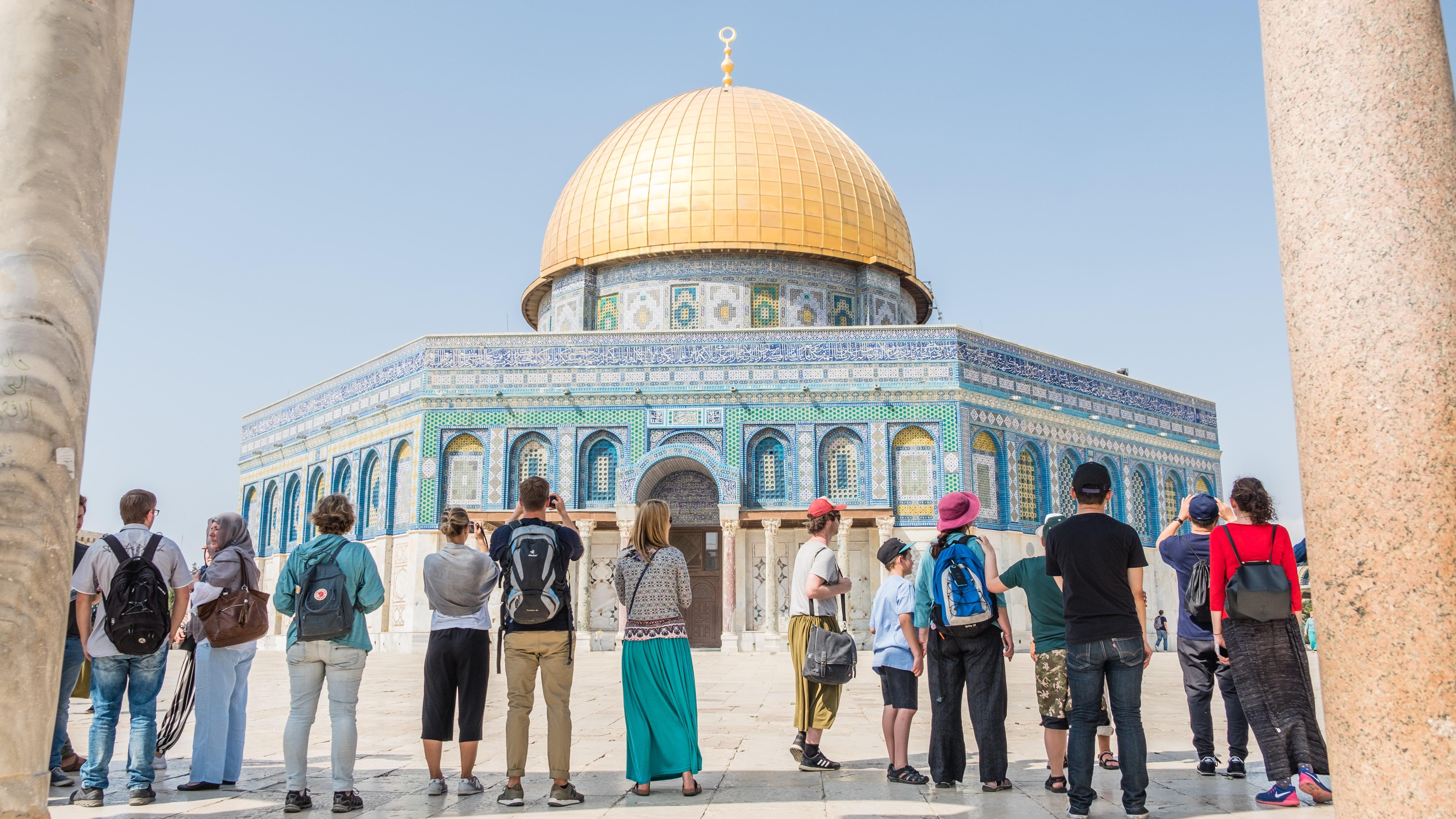
Old City Jerusalem Guided Walk
Explore sacred sites across four quarters on this immersive walk through Jerusalem's walled heart
ReserveHand-picked by our editors — only the best 5 experiences from 47 reviewed.
Verified partners for every tour, free cancellation where available, and instant confirmation on every booking.
4 hr
Explore sacred sites across four quarters on this immersive walk through Jerusalem's walled heart
Reserve
9 hr
Journey beneath the modern streets to discover where Jerusalem's 3,000-year story began.
Reserve
11 hr
Descend beneath modern Jerusalem to walk the ancient streets where biblical history began
ReservePrices from verified partners. Availability updates in real time at checkout. Free cancellation policies apply where shown.
The landmarks, rooms, and views travelers on this tour remember — all visible on a single visit.
A 2,700-year-old water tunnel carved through solid rock that remains a marvel of ancient engineering.
The primary water source for ancient Jerusalem where kings were historically anointed.
The historic destination of the water route where visitors emerge after the tunnel walk.
An underground stone tunnel that served as a final refuge during the Roman siege.
Archaeological remains believed to be the foundation of the residence of King David.
The City of David provides an active hydrological adventure, while the Western Wall Tunnels offer a deep dive into monumental Herodian architecture; both are essential Jerusalem landmarks for understanding the city's ancient layers. Many travelers find the water-based jerusalem underground tunnel tour more physically immersive, whereas the subterranean Western Wall site is preferred for those prioritizing religious history.
| Feature | Top pick City of David | Western Wall Tunnels |
|---|---|---|
Primary Focus |
Hydrology and ancient water systems | |
Water Involvement |
Wading through knee-deep water | |
Walking Intensity |
Moderate to active | |
Archaeological Era |
Iron Age and Middle Bronze Age | |
Historical Context |
The City of David archeology | |
Access Requirements |
Pre-booked jerusalem underground tunnel tour tickets | |
| See tickets → |
Verdict: Choose the City of David for an adventurous exploration of Hezekiah’s Tunnel, or opt for the Western Wall Tunnels for a solemn, architectural perspective on jerusalem underground tunnel tour tours.
Choose your ticket, select your date, and reserve in under two minutes. Secure checkout handled by our verified partner.
Instant confirmation by email, with a mobile voucher you can save offline. No printing, no queuing at a collection desk.
Arrive at the entrance, show your voucher on your phone, and walk in. Most tickets include priority or skip-the-line access.
Practical details for your visit straight from our verified partners — hours, access, rules, and how to get there.
Modest dress is recommended when visiting the surrounding Jerusalem area. For the water tunnel route, wear clothes that can get wet and bring a change of apparel.
Security checks are conducted at the entrance. On-site lockers are available for storing bags and personal belongings during your visit.
Photography is permitted throughout the archaeological park and within the tunnels. Ensure your camera is secured in a waterproof pouch if taking it into the water route.
Due to the ancient archaeological nature of the Jerusalem underground tunnel tour site, the terrain is uneven with many stairs and is not suitable for wheelchair users.
The site is family-friendly and popular with children, though the water route is best suited for ages 5 and older. Expect an active, educational experience for all ages.
A snack bar is located on-site offering various refreshments. Water and light snacks are recommended for those undertaking the longer walking routes.
Best time to go, insider tips, nearby landmarks, and the cancellation fine print — flip through to skim what matters to you.
Flexible, no hidden fees.
Reservations for tours and private activities can be canceled up until the day before the visit. Please refer to official booking terms for refund eligibility regarding the 28 ILS conservation fee.
King Hezekiah ordered the tunnel carved through 533 meters of solid bedrock in 701 BCE, a desperate gambit to secure Jerusalem's water supply before the Assyrian siege. Two teams of miners tunneled from opposite ends, meeting in near-perfect alignment beneath the City of David—an engineering feat memorialized in the Siloam Inscription, discovered on the tunnel wall in 1880. The waterway diverted the Gihon Spring's flow inside the city walls, rendering the external source invisible to Sennacherib's army. Today the tunnel remains intact, its chisel marks and occasional course corrections preserved in limestone. The Western Wall Tunnels extend 488 meters along the Temple Mount's western foundation, exposing Herodian ashlar blocks weighing up to 570 tons. Excavations begun in 1967 revealed street-level Jerusalem from the Second Temple period: a stone-paved plaza, a massive water channel, and Wilson's Arch supporting a monumental bridge. The tunnels trace the wall's full northern length, inaccessible from the open-air prayer plaza, and terminate at the Via Dolorosa. Archaeological layers compress two millennia—Hasmonean aqueducts, Roman pavement, Mamluk housing—into a single vertical sequence. Both Jerusalem underground tunnel tours require advance reservations. Hezekiah's Tunnel involves wading through knee-deep spring water; the Western Wall route is dry and wheelchair-accessible for most sections. The City of David site opens Sunday through Thursday 08:00–17:00, Friday until 14:00, and closes Saturday. The 28 ILS conservation fee grants entry to the national park; guided tunnel experiences are booked separately. Visitors entering the Western Wall Tunnels do so under the supervision of the Western Wall Heritage Foundation, with tours departing at fixed intervals throughout the day. The tunnels anchor Jerusalem's archaeological tourism economy. More than 400,000 annual visitors navigate the subterranean passages, making them the city's most-visited underground attractions. The routes intersect active excavation zones; new chambers and artifacts surface periodically, altering interpretive narratives. Both waterway and foundation wall appear on UNESCO's Tentative List for World Heritage designation, though political jurisdiction over the Old City complicates the nomination process. The tunnels remain functional heritage—Hezekiah's conduit still channels spring water, and the Western Wall Tunnels abut active prayer spaces above.
"Two teams of miners tunneled from opposite ends, meeting in near-perfect alignment beneath the City of David—an engineering feat memorialized in the Siloam Inscription."
A step-by-step walkthrough of the visit — what you'll see, how long each stage takes, and the details that matter.
You descend stone steps into the Gihon Spring chamber, where cool air rises from the tunnel mouth. The guide distributes waterproof phone cases and flashlights; you step into ankle-deep water. Within ten meters the passage narrows to shoulder width, the ceiling dropping to 1.8 meters. You wade forward, the water climbing to mid-calf, then knee-height as the tunnel curves west. Chisel marks score the walls in overlapping arcs; you can trace the miners' progress by the tool patterns. At the halfway point a small plaque marks where the two teams met—the floor rises slightly here, evidence of the northbound crew's higher elevation. The Western Wall Tunnels begin at the plaza's northern edge, descending through a modern vestibule into Herodian street level. You walk beside the foundation wall, each ashlar block numbered and mapped. The largest—the Western Stone—spans 13.6 meters and weighs an estimated 570 tons; you stop to photograph the seam where it meets the adjacent course. The tunnel opens into Warren's Gate chamber, a vaulted prayer space facing the wall's closest point to the former Holy of Holies. You continue north through a Hasmonean water channel, its plastered walls still bearing red pigment, and emerge at street level near the Via Dolorosa. The entire route takes 75 minutes.
The City of David is open Sunday–Thursday 08:00–17:00 and Friday 08:00–14:00; it is closed on Saturdays.
Unfortunately, the site is not wheelchair accessible due to its archaeological nature and uneven terrain.
Yes, you can secure your spot in advance via the official website to ensure entry for your jerusalem underground tunnel tour.
The entrance fee is 28 ILS per person, which serves as a conservation fee for the national park.
Yes, there are lockers available for rent at the City of David visitor center for your convenience.
Bring water shoes, a flashlight, and a change of clothes, especially if you plan to walk through the water tunnel route.
Yes, you are welcome to take photos throughout the site, but keep electronics safe in waterproof bags if entering the water.
The best arrival window is 08:00–14:30 to avoid crowds and ensure you have enough time to complete the tunnel route.
Yes, the tour is family-friendly and suitable for children ages 5 and up, making it a great choice for a jerusalem underground tunnel tour tour.